The Brighton Blueprint: How Algorithm-Driven Scouting is Breaking the Transfer Market
Brighton's recruitment model works less like a football department and more like a trading desk: data narrows the search, scouts verify it, and the coach signs off. The result is a repeatable cycle of buying undervalued talent and selling it for huge profit, one that's now forcing every rival club to rethink how it scouts.
Every summer, the same ritual plays out at Brighton & Hove Albion. A star is sold for an eye-watering fee, pundits predict decline, and a replacement nobody has heard of walks in the door. A season later, that replacement is being chased by Europe's biggest clubs. It has happened with Moisés Caicedo, Marc Cucurella, Alexis Mac Allister, Yves Bissouma and Ben White, among others, and each time, the model has simply reloaded rather than broken down.
That consistency is not luck. It's the product of a recruitment machine built less like a football department and more like a quantitative trading desk, because, in a very real sense, it is one.

From Betting Markets to the Transfer Market
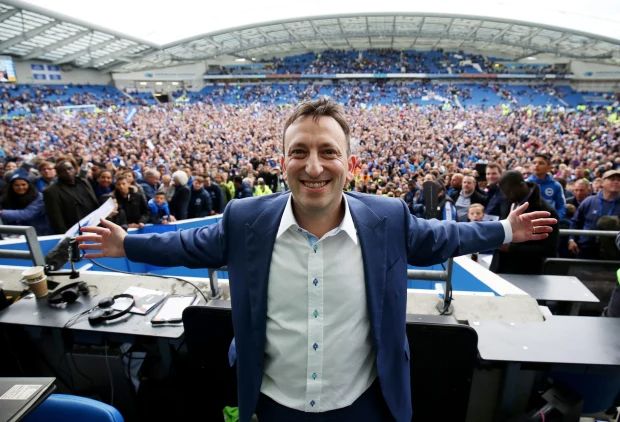
Brighton's owner, Tony Bloom, made his fortune running Starlizard, a sports-betting consultancy that prices football matches using statistical models rather than gut instinct. When Bloom took control of Brighton, he imported that same philosophy into recruitment: treat every player like a mispriced asset, and treat scouting like an exercise in finding market inefficiencies before anyone else spots them.
The result is a recruitment process built around positional need first, data second, and human eyes last. Club figures have described the process as starting with a data-driven shortlist for a specific tactical role, which is then verified by scouts on the ground and screened for character fit, before the head coach signs off, often with a genuine veto over any deal.
That last detail matters. Brighton's model isn't analytics overriding coaching; it's analytics narrowing the search so that human judgment is spent efficiently rather than wastefully. It also explains why the club has needed a comparatively lean scouting operation relative to rivals with far larger networks: the algorithm does the geographic legwork, and humans go wherever the data points.
The Numbers Behind the Model
The financial results have been startling for a club of Brighton's size. Brighton posted a record £122.8 million post-tax profit for the year ending June 2023, a figure achieved while running only the 13th-highest wage bill and the 17th-most expensive squad in the Premier League. Over a longer horizon, Brighton has been the only Premier League club to post a net positive transfer result over a recent five-year stretch, banking more than €116 million, even after losing a conveyor belt of first-team talent.
The pattern has continued into more recent windows too, with the club's 2024-25 accounts showing another substantial nine-figure trading surplus, and the summer of 2026 shaping up as another year of selling high and reinvesting with precision rather than panic.
Buy Low, Sell High, Repeat
What makes the Brighton model unusual isn't just that it finds good players; plenty of clubs have a scout who gets lucky once. It's that the model has now produced a repeatable production line: Cucurella arrived for a modest fee and left for tens of millions, Mac Allister was similarly undervalued on arrival before a big-money exit, and Caicedo's departure alone brought in over £100 million. Each sale doesn't just fund a replacement, it funds a *better* data pipeline for finding the next one.
That reinvestment loop is the real innovation. Analytics identifies undervalued talent, sales generate capital, and capital is partly redirected back into the recruitment infrastructure itself, including the data partnerships and technology that power the next cycle. It is a flywheel that traditional "scout network plus chairman's checkbook" models struggle to replicate, because their profits get spent on wages and marquee fees rather than on strengthening the search process itself.
A Model Still Evolving
The approach hasn't stood still. In late 2024, reporting emerged that Brighton had significantly restructured its recruitment staff, moving away from a large traditional scouting team in favor of leaning even further into data infrastructure and close analytical partners. It was widely framed as the club doubling down on the philosophy that built its reputation in the first place, rather than a retreat from scouting altogether.
It also hasn't been friction-free. Roberto De Zerbi's departure in 2025 was linked in part to tension over recruitment strategy, a reminder that even a proven algorithmic approach still has to coexist with a coach's tactical convictions and a squad's dressing-room chemistry. Data can identify a player's attributes, but it can't fully guarantee fit. Under Fabian Hürzeler, who has since signed a contract extension through 2029, that alignment between data department and dugout appears to have stabilized again.
Why It's "Breaking" the Market
Calling this a market "break" isn't hyperbole. Brighton's success has forced a repricing across the entire English football pyramid and into Europe's feeder leagues. Clubs that once relied on reputation and traditional scouting now compete against a rival that can identify undervalued players in overlooked leagues before they're on anyone else's radar, and can do it with a fraction of the scouting headcount.
The knock-on effect is that other clubs have had to invest heavily in their own data departments simply to keep pace, driving up demand (and cost) for football analytics talent leaguewide. Meanwhile, players who might once have gone unnoticed in second-tier leagues now carry a premium, because everyone knows Brighton, or a Brighton imitator, might already have them shortlisted.
The Takeaway
Brighton's blueprint isn't really about football intelligence beating football tradition. It's about treating recruitment as a continuous, capital-efficient process rather than a series of one-off gambles. Every sale isn't an ending, it's fuel for the next discovery. As long as that flywheel keeps turning, and the coaching staff stays aligned with the model, Brighton looks less like a plucky overachiever and more like the prototype every mid-table club will eventually be measured against.